
Introduction
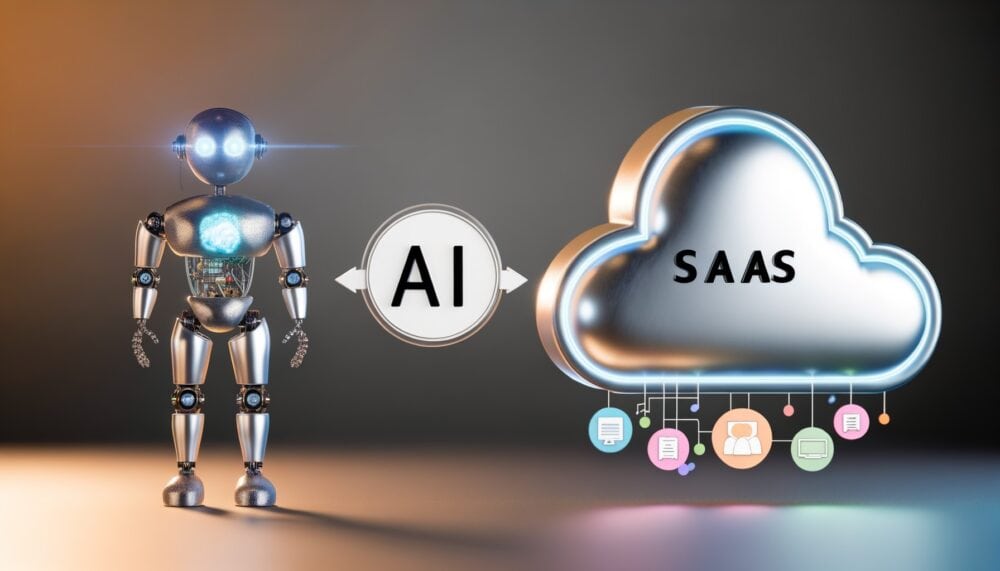
In today’s rapidly evolving tech landscape, Artificial Intelligence (AI) agents and traditional Software as a Service (SaaS) applications represent two significant paradigms. As businesses strive to stay at the forefront of innovation, understanding the mechanisms, advantages, and functionality of AI agents compared to traditional SaaS platforms becomes crucial. This article delves into an in-depth comparison of AI agents and SaaS applications, highlighting how AI-driven solutions are not only enhancing but also poised to replace many traditional SaaS services due to their superior efficiency and adaptive capabilities.
The Evolution from SaaS to AI Agents
The transition from traditional SaaS applications to AI agents marks a pivotal shift in software solutions. Unlike SaaS, which typically offers a fixed set of functionalities accessible via the internet, AI agents learn from interactions and improve over time, addressing complex needs more effectively.
Understanding AI Agents
AI agents operate on principles of machine learning and artificial intelligence, enabling them to perform tasks with a level of autonomy and intelligence not found in conventional SaaS platforms. This intrinsic adaptability allows AI agents to offer personalized experiences and make informed decisions.
Comparative Analysis: Performance
Comparing the performance between SaaS and AI agents involves looking at their processing capabilities and efficiency. AI agents often outperform SaaS applications due to their ability to learn and adapt from data without human intervention. A table illustrating performance metrics can highlight differences in processing speed, uptime, and adaptability:
| Feature | SaaS | AI Agent |
|---|---|---|
| Processing Speed | High | Higher |
| Uptime | High | Higher |
| Adaptability | Low | High |
User Experience and Personalization
The ability of AI agents to provide a tailored user experience is a significant advantage over SaaS applications. Through the continuous analysis of user data, AI agents personalize interactions and recommendations, enhancing user satisfaction and engagement.
Scalability and Integration
AI agents excel in scalability and can seamlessly integrate with existing systems, learning from and enhancing them. This is in stark contrast to SaaS applications that may require manual updates and integrations, often resulting in compatibility issues.
Cost Implications
While initially more expensive to implement, AI agents can lead to significant cost savings over time due to reduced human input and enhanced automation capabilities. The following list breaks down cost aspects:
- Initial Setup Cost: Higher for AI
- Maintenance Cost: Lower for AI
- ROI: Potentially higher for AI due to automation
Security and Privacy
Security is paramount in both AI and SaaS solutions. However, AI agents offer advanced security features like predictive security, which anticipates potential breaches before they occur, a step ahead of traditional methods employed by SaaS applications.
Market Adaptability
AI agents are designed to quickly adapt to changing market conditions, learning and evolving from new data. This is essential in industries like finance and healthcare, where being able to predict and react to changes can significantly alter outcomes.
Challenges and Limitations
Despite their advantages, AI agents also face challenges such as data bias and high dependency on quality data for learning. Transparently acknowledging these limitations allows for a balanced understanding of when AI might be the preferred solution over SaaS or vice versa.
Conclusions
As we’ve explored, AI agents offer compelling advantages over traditional SaaS applications by excelling in areas like performance, personalization, and adaptability. Businesses looking towards future scalability and operational efficiency are seeing AI agents not just as a tool but as an essential investment. The industries poised to benefit most from AI adoption include those where speed, data processing, and adaptability play crucial roles, such as fintech, healthcare, and e-commerce. While the transformation from SaaS to AI agents involves initial challenges and investment, the long-term benefits in terms of cost, deep personalization, and security, present a promising outlook for AI as the future backbone of digital services.